 Reviews


 Proudly American


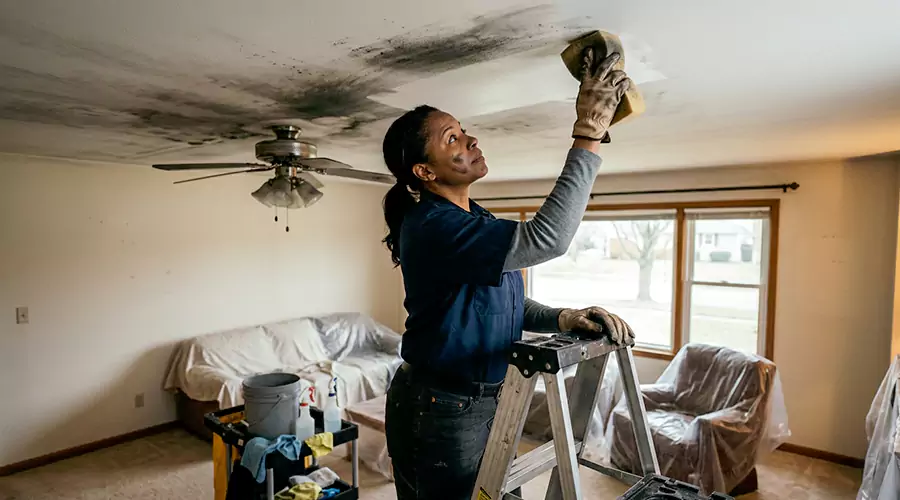
Smoke damage on a ceiling should be cleaned by removing loose soot first, then using a suitable dry-cleaning method before any damp washing begins. Starting with water can smear fine residue into paint. Heavy staining, recurring odor, or heat-damaged drywall may require repair instead of repeated cleaning. Smoke and water damage restoration may be needed when both smoke residue and moisture have affected the ceiling.
Ceilings often collect more smoke residue than walls because hot smoke rises and spreads across the upper part of a room.
Why Does Smoke Collect on Ceilings?
Smoke rises with heated air and deposits particles on cooler ceiling surfaces. Corners, areas above doorways, and spaces near air registers can collect more residue than the center of a room. A ceiling can therefore look gray even when the fire never touched it directly. Ceiling smoke damage may include visible soot, yellow-brown staining, or a persistent smoky smell.
What Should You Do Before Cleaning the Ceiling?
Before cleaning, confirm that the property is safe to enter and that the ceiling is structurally sound. Look for sagging or cracking before placing a ladder beneath the damaged area. Firefighting water can weaken drywall even when the smoke staining itself appears light.
Prepare the room with these steps:
- Photograph the ceiling before cleanup.
- Remove or cover furniture below the work area.
- Protect flooring with washable or disposable coverings.
- Turn off ceiling fans in the affected room.
- Check for wet or sagging drywall.
- Wear gloves and suitable respiratory protection.
Do not begin cleaning if the ceiling feels unstable or if water is dripping through electrical fixtures.
How Do You Remove Loose Soot From a Ceiling?
Loose soot should be removed without rubbing it into the paint. A vacuum fitted with suitable fine-particle filtration can collect dry residue when the nozzle is held slightly away from the ceiling. Pressing the nozzle against the surface can create dark streaks. After vacuuming, a dry chemical sponge can help with light soot. Wipe in straight passes with light pressure. Change to a clean section of the sponge once the surface becomes dark. This dry-first approach works well for smoke damage cleaning because it removes particles before moisture can turn them into smears.
How Should You Wash a Smoke-Damaged Ceiling?
Damp cleaning should begin only after loose soot has been removed. Test a small hidden area first because flat ceiling paint can mark or lose color when scrubbed. Use a cleaner that is appropriate for the painted finish and avoid soaking the drywall.
A practical sequence is:
- Clean a small section near one edge.
- Use a lightly damp cloth or sponge.
- Wipe without aggressive scrubbing.
- Change dirty cloths frequently.
- Allow the area to dry.
- Recheck for remaining residue.
Can Textured Ceilings Be Cleaned?
Textured ceilings require more caution because aggressive wiping can flatten or remove the texture. Dry soot removal is often safer than repeated wet scrubbing. Some older ceiling textures also need special handling before they are disturbed.
| Ceiling Type | Typical Cleaning Approach |
|---|---|
| Smooth painted drywall | Dry removal then careful washing |
| Light texture | Gentle dry cleaning first |
| Heavy texture | Minimal rubbing and closer evaluation |
| Water-softened drywall | Repair may be needed |
| Charred surface | Replacement is usually more practical |
How Can You Tell if Cleaning Is Working?
A cleaned ceiling should stop transferring gray or black residue after it dries. Odor should also decrease once soot has been removed.
Watch for these warning signs:
- Dark residue returns after drying.
- A smoky odor comes back overnight.
- Staining bleeds through after cleaning.
- Paint starts blistering.
- Drywall feels soft.
- The ceiling begins sagging.
- Soot appears around light fixtures.
- Several rooms show similar upper-level staining.
Smoke damage repair becomes more likely when the problem extends below the painted surface.
What Can You Check Yourself After Cleaning?
A white-cloth test can show whether loose residue remains. Wait until the cleaned section is dry, then wipe it lightly with a fresh white cloth. Gray transfer means more surface cleaning is needed. You can also close the room for several hours and return to check for odor. Strong returning odor can indicate that smoke remains in ceiling material, insulation, or nearby furnishings.
When Should You Call a Professional?
Professional assessment is appropriate when smoke damage covers a large ceiling area or when the ceiling has been affected by heat or firefighting water. Help is also useful when repeated cleaning does not stop stains or odor from returning.
Consider professional help when:
- The ceiling is sagging.
- Drywall feels soft.
- Smoke odor persists after cleaning.
- Soot covers several rooms.
- Electrical fixtures were exposed.
- Insulation above the ceiling may be contaminated.
- The surface is charred.
- The ceiling texture cannot be cleaned safely.
Fire and smoke damage restoration may involve selective drywall removal when contamination or water damage has reached materials above the visible surface.
How Can You Prevent Soot From Spreading During Cleanup?
Containment helps keep ceiling soot from settling in clean rooms. Work on one area at a time and avoid moving dirty equipment through the home without cleaning it first.
Useful steps include:
- Keep doors to unaffected rooms closed.
- Change dirty gloves as needed.
- Bag used cleaning materials.
- Vacuum fallen particles from protected flooring.
- Keep the HVAC system off if it is visibly spreading residue.
- Clean tools before moving to another room.
Conclusion
Smoke damage on a ceiling can often be cleaned when soot remains near the surface and the drywall is still sound. Begin with dry particle removal before any damp washing. Use gentle methods on textured ceilings and stop if the material begins to break down. If odor keeps returning or the drywall is soft, professional assessment can determine whether cleaning or replacement is the better option.
Frequently Asked Questions
Can you use soap and water on a smoke-damaged ceiling?
Yes, after loose soot has been removed and the paint finish can tolerate damp cleaning. Test a small area first.
Can smoke stains be painted over?
Only after soot has been cleaned and the ceiling is fully dry. A stain-blocking primer may be needed before repainting.
Why does my ceiling still smell smoky after cleaning?
Smoke may remain inside porous drywall or insulation. Fabrics and other nearby materials can also hold odor.
Does a black ceiling always need replacement?
No. Surface soot can often be cleaned when the drywall remains firm and undamaged.
Can a textured ceiling be scrubbed?
Heavy scrubbing can damage the texture. Gentle dry cleaning is usually a safer first step.
Should wet ceiling drywall be cleaned after a fire?
Drying and structural condition should be checked first. Soft or sagging drywall may need removal rather than cosmetic cleaning.